
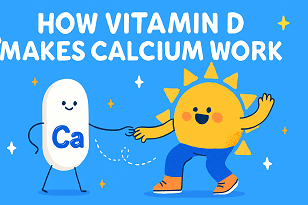
This guide explains how vitamin D actually enables calcium(ca) to do its job — from gut absorption to bone rebuilding — plus how to stack nutrients like magnesium, K2, and protein with resistance training for lasting bone strength. You’ll also find a practical foods + sunlight checklist and split-dose calcium tips for better results.
1. Calcium’s Silent Role in Your Everyday Moves
Every step you take, every muscle that contracts, and every heartbeat depend on calcium. Yet only about 1% of it flows in your blood — the rest is locked inside bones as a mineral reserve. Your body constantly borrows and returns calcium as needed, making balance a full-time job.
Without enough dietary calcium, your body quietly “withdraws” it from bones to keep essentials running. That’s why bone thinning creeps up unnoticed until later years — and why just eating calcium isn’t enough.
2. When Calcium Meets a Lock: Why Vitamin D Holds the Key
Calcium doesn’t automatically slide into your bloodstream. It needs active transporters in the intestine — and those are switched on by vitamin D. Think of vitamin D as the key that unlocks calcium’s passageway from food to blood.
Without vitamin D, much of your dietary calcium just passes through unused. People with low vitamin D miss out on up to 70% of calcium absorption potential. That means even perfect calcium intake won’t build strong bones if D levels are low.
3. Passive vs. Active Absorption: Your Body’s Two Routes
- Passive absorption happens naturally when calcium moves through the gut wall — but this route captures only a small fraction and depends on how much calcium you eat at once.
- Active absorption, driven by vitamin D, pulls calcium into cells through special channels and proteins. It’s regulated to avoid overload and ensures bones actually receive what they need.
In simple terms: vitamin D turns on the “active mode.” Without it, you’re stuck in passive gear.
4. The Vitamin D Deficiency Trap
Many adults — especially in India and other sunny regions — assume their sunlight exposure covers vitamin D needs. It often doesn’t. Air pollution, indoor lifestyles, darker skin, and clothing layers all block efficient vitamin D creation.
When D stays low:
- Calcium absorption falls below 30% efficiency.
- Parathyroid hormone rises, pulling calcium out of bones.
- Fracture risk and fatigue increase, even on a good diet.
To stay safe, aim to check vitamin D levels yearly and supplement responsibly under guidance.
5. How to Stack Nutrients for Real Calcium Gains
Getting calcium and vitamin D right is step one — but your bones need a supporting cast:
a. Vitamin K2: It directs calcium into bones instead of arteries by activating osteocalcin, a bone-binding protein.
b. Magnesium: It’s a cofactor in converting vitamin D into its active form (calcitriol). Without it, both D and calcium underperform.
c. Protein: Collagen-rich protein gives bone its flexible framework, allowing minerals to attach and resist fractures.
Together, these nutrients form a “bone team” — calcium is the actor, vitamin D the director, and magnesium/K2 the script editors ensuring every line lands right.
6. Calcium With Movement: Resistance Training Multiplies the Benefits
Absorbed calcium won’t stick if bones never get the signal to rebuild. That signal comes from mechanical stress — strength or resistance training.
Activities that load muscles and bones (like bodyweight squats, stair climbs, elastic bands, or dumbbells) tell your skeleton, “We need stronger support!” The body responds by storing more calcium and forming denser bone.
Try this weekly rhythm:
- 2–3 sessions of resistance exercise.
- 30–45 minutes each, alternating upper and lower body.
- Include core work to prevent falls and fractures.
Even light training can amplify calcium’s effect by 20–30% over time.
7. Foods + Sunlight Checklist for Natural Calcium & Vitamin D
A balanced diet delivers steady nutrients without relying on pills alone.
Calcium-rich choices:
- Curd, paneer, and fortified milk
- Ragi (finger millet) and sesame seeds
- Almonds, amaranth, and sardines with bones
Vitamin D sources:
- Morning sunlight (10–15 minutes on arms/face before 10 a.m.)
- Fortified foods like milk, plant beverages, and breakfast cereals
- Egg yolks, mushrooms, and fish such as salmon or mackerel
Magnesium & K2 partners:
- Nuts, beans, spinach, and whole grains (for magnesium)
- Fermented foods like natto or cheese (for K2)
Checklist reminder:
- Aim for daily calcium 1000–1200 mg (from food first).
- Ensure vitamin D stays in the optimal blood range (30–50 ng/mL).
- Combine with 15 minutes sunlight and weekly resistance activity.
8. Why Split-Dose Calcium Helps Your Body Absorb More
Your gut can only absorb about 500 mg of calcium at a time. Taking large doses together often means the extra goes unabsorbed.
Better strategy: Divide calcium intake into two or three smaller doses throughout the day, ideally with meals that contain some fat to help vitamin D absorption too.
Sample plan:
- Morning: 1 cup curd + 1 tablespoon sesame seeds
- Lunch: Ragi roti + green leafy veg
- Evening: Fortified milk or tofu with stir-fried veggies
Small, frequent calcium boosts keep absorption steady and minimize side effects like bloating or constipation.
9. Beyond Supplements: Smart Habits That Protect Bone Calcium
Even the best nutrients need supportive lifestyle habits:
- Cut back on excess salt and caffeine — both increase calcium loss in urine.
- Maintain hydration to keep kidneys filtering efficiently.
- Don’t smoke or overdrink; both weaken calcium retention.
- Get enough restorative sleep — bone remodelling peaks at night.
Strong bones are built by routine, not rigidity. Consistency turns daily choices into structural strength.
10. Putting It All Together: The Calcium Confidence Plan
To recap how everything connects:
- Eat calcium-rich foods — dairy, millets, greens, and seeds.
- Support absorption with enough vitamin D from sunlight or fortified foods.
- Activate bone metabolism with K2, magnesium, and quality protein.
- Strengthen structure through regular resistance movement.
- Repeat daily, split your calcium doses, and recheck vitamin D levels seasonally.
Your bones thrive on teamwork. Calcium may be the headline nutrient, but it only becomes functional under vitamin D’s direction — and with help from its mineral allies. Build that synergy, and your skeleton will quietly reward you with decades of steady strength.
Action Point: Start by checking your sunlight exposure and current diet today. Add one practical step — maybe morning walks or sesame seeds at lunch — and build from there. Small, consistent tweaks make calcium truly work for you.
Disclaimer: Information here is educational and not alternative to medical advice; consult your doctor before making any diet, supplement, or exercise changes