
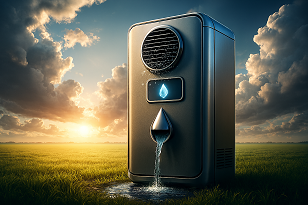
Clean water is one of the world’s essential needs. Yet, millions face scarcity every year. While many regions struggle with dry climates, new technology now offers hope. A machine that pulls water from air could change how we think about droughts. This innovation may bring life to deserts and provide safe drinking water where none exists.
What Is Atmospheric Water Generation?
Atmospheric Water Generation (AWG) is the modern method used to extract water from thin air. These machines collect moisture present in the air and convert it into clean, drinkable water. Although air may appear dry, it always holds invisible humidity. By capturing and condensing that humidity, AWG machines produce liquid water using natural processes.
How Does It Work?
The process may sound like magic, but it follows science. The machine mimics how dew forms in the morning. Here’s how it happens:
- Air intake: The system draws in ambient air.
- Cooling process: The air cools to the dew point.
- Condensation: Moisture turns into droplets.
- Filtration: The captured water passes through filters.
- Storage: Finally, clean water is stored and ready for use.
Each stage ensures high water purity and consistent production, even in low-humidity environments.
The Science Behind Making Water from Air
Air always contains water vapor. When you lower the air temperature below its dew point, the vapor condenses into liquid water. That is why grass gets wet after a cool night. Atmospheric Water Generators use the same concept on a larger scale.
To boost output, these machines rely on energy-efficient compressors, fans, and filters. Advanced systems also use solar power to make the water collection process completely sustainable.
Types of Atmospheric Water Generators
Different designs suit different regions. Here are some common types:
- Cooling-based AWG: Works by condensation through refrigeration.
- Desiccant-based AWG: Uses hygroscopic materials to absorb water from air.
- Hybrid AWG: Combines both technologies for higher efficiency.
These variations allow AWGs to work in both humid areas and dry zones.
Why Water from Air Matters Today
With climate change worsening droughts, finding new water sources is vital. Natural freshwater supplies are shrinking. However, the air above us contains six times more water than all rivers combined. If we can tap even a small part of that, humanity could gain a sustainable source forever.
Benefits of Atmospheric Water Machines
Using air to create water brings multiple advantages:
- Self-sufficiency: No need for lakes, rivers, or pipelines.
- Purity: Output water is clean and mineral-balanced.
- Scalability: Systems can be used at home or in large communities.
- Sustainability: Many models operate on renewable energy.
- Accessibility: Works even in remote desert or island locations.
Because AWGs work independently, they can deliver water relief fast during emergencies or disasters.
Can This Solve the Drought Crisis?
While not a complete fix, it can be a major step forward. Droughts occur when rainfall is too low to replenish surface and underground water. By generating water directly from air moisture, communities can maintain essential supplies during dry years.
Experts predict that integrating AWGs with solar or wind systems can create off-grid water independence. That could transform how agriculture, villages, and industries survive droughts.
Energy Requirements and Limitations
Every technology has trade-offs. AWG machines consume energy for cooling and condensation. The efficiency drops in regions with less than 25% humidity. However, innovation is making progress. With smart sensors and renewable power, new models produce water using minimal energy.
Research is ongoing to improve performance by:
- Adding solar thermal assistance.
- Enhancing heat exchanger design.
- Using nano-materials for better absorption.
As these systems evolve, they will become cheaper and more reliable.
Real-World Success Stories
Countries already experimenting with these machines show impressive results.
- India: Rural areas use solar-powered AWGs for schools and villages.
- United States: Military bases produce fresh water in remote sites.
- Israel: A leading company produces thousands of liters daily using warm desert air.
- Kenya: Local startups provide affordable AWG installation for communities facing severe drought.
Each case proves that water can be drawn from air efficiently and safely.
AWG vs Traditional Water Systems
| Feature | AWG Machines | Traditional Systems |
|---|---|---|
| Source | Air humidity | Rivers, wells |
| Sustainability | High with renewables | Low, often depletes sources |
| Purity | Filtered at production | May require treatment |
| Setup | Quick, modular | Heavy infrastructure |
| Drought resistance | High | Low |
Clearly, water from air gives strong advantages for areas struggling with low rainfall or poor accessibility.
Environmental Impact
Producing water from air also supports environmental protection. Conventional supply methods like drilling or dam construction disturb ecosystems. AWGs reduce the stress on natural water reserves. Additionally, because many models run on solar panels, they release almost no emissions.
However, proper disposal of filters and components is essential to prevent waste buildup.
The Role of Renewable Energy
Pairing AWGs with renewable sources ensures eco-efficiency. Solar-powered water machines have become popular due to abundant sunlight in drought-prone regions. In windy or desert areas, hybrid renewable setups can power AWG units throughout the year.
By running on renewables, the technology aligns with global sustainability goals, especially the UN’s focus on clean water and affordable energy for all.
How Much Water Can It Produce?
Production depends on humidity and machine size. A small residential model can create 15–30 liters daily. Industrial ones can generate several thousand liters. For instance:
- Small homes: Up to 25 liters per day.
- Offices or schools: Between 100 and 500 liters.
- Communities or farms: Over 5,000 liters daily.
Even when humidity is moderate, users can combine AWGs with dehumidifiers or desiccant aids to enhance water yield.
The Cost Factor
Initially, the cost per liter is higher than tap water, but it continues to fall. Factors affecting cost include local humidity, energy prices, and maintenance. With widespread adoption and renewable power integration, the per-liter expense could soon rival bottled water rates.
Governments and startups are exploring mass deployment to lower prices further.
Challenges and Solutions
Challenges:
- High initial investment.
- Dependence on ambient humidity.
- Regular maintenance needs.
Solutions:
- Use hybrid power systems.
- Develop low-cost filter replacements.
- Integrate humidity-storing materials.
Smart regulation and technology partnerships can make large-scale AWG use feasible worldwide.
Will It Replace Traditional Systems?
Not entirely. Rivers, rainwater, and desalination will still supply most global demands. Yet AWGs will fill crucial gaps during drought, migration, and disaster recovery. The shift is not about replacement but diversification. By combining natural water collection sources, humanity can stay resilient during climate extremes.
Water for the Future
The next generation of AWG machines is under development. Future units aim to deliver higher yield, lower energy demand, and portable flexibility. Soon, we may see water generators compact enough for personal use — even powered solely by sunlight and air.
This simple idea — drawing water from air — might become one of the century’s greatest humanitarian innovations.
How People Can Use This Technology
If you live in a dry or uncertain region, here’s how you can benefit:
- Home Users: Consider a small residential AWG for pure drinking water.
- Farmers: Use large solar-powered models to protect crops during drought.
- Businesses: Reduce bottled water costs and build eco-credentials.
- Communities: Install public water ATMs with AWG integration.
By taking early steps, communities can secure an affordable, long-term water supply.
Simple Tips to Maximize Efficiency
To get the most water from an AWG system:
- Keep air filters clean.
- Place the unit in open airflow.
- Use solar or hybrid energy sources.
- Collect condensed water regularly.
- Monitor humidity using sensors.
Small habits can double production and extend machine lifespan.
Key Differences Between AWG and Desalination
| Aspect | Atmospheric Water Generation | Desalination |
|---|---|---|
| Input | Air | Seawater |
| Output purity | Naturally distilled water | Requires chemical treatment |
| Environmental impact | Minimal | High salt waste |
| Setup cost | Moderate | Expensive |
| Ideal for | Dry inland regions | Coastal or island areas |
This comparison highlights how AWG offers local water independence with fewer environmental costs.
The Social Impact of Water-from-Air Technology
When remote villages gain access to clean water, it creates a domino effect:
- Health improves as disease risk drops.
- Children, especially girls, spend less time collecting water.
- Agriculture thrives, stabilizing food supply.
- Jobs arise from AWG system maintenance and operation.
Ultimately, water extraction from air can empower entire regions toward self-sufficiency.
Global Investment and Support
Many international organizations fund pilots to scale this innovation. Investment trends include:
- Public-private partnerships for rural infrastructure.
- Green energy funds supporting AWG startups.
- Smart city projects integrating AWG systems.
- Corporate water-offset programs for sustainability goals.
With such backing, the water-from-air industry is projected to grow rapidly this decade.
Is It Safe to Drink Water from Air?
Yes, when the system is maintained properly. Collected water passes through multi-layer filtration, UV purification, and mineral balancing. The result is safe, pH-balanced, and clean water, often purer than bottled alternatives. Always test filters and replace them as recommended.
Future Possibilities: Smart AWG Networks
Researchers envision connected water generation networks. Each AWG system can share humidity data and production rates. Using smart IoT platforms, towns could balance demand and supply in real time. This would ensure that no one runs short, even in dry months.
Such systems promise a digital revolution in water management.
Role of Governments and Startups
To maximize impact, both sectors must work together:
- Governments should offer tax incentives and grants.
- Startups can lead with innovation and cost reduction.
- NGOs can bring water-from-air units to disaster zones.
- Communities should engage in awareness and training.
Collaboration creates a unified effort toward global water security.
Action Plan for a Drier World
- Assess Local Needs: Identify zones most affected by drought.
- Adopt AWG Systems: Start with pilot installations.
- Integrate Renewables: Power machines with solar or wind.
- Train Operators: Ensure skilled maintenance teams.
- Scale Gradually: Expand coverage based on success data.
Turning air into water is not just technology — it’s hope for the future.
Key Takeaways
- Air holds huge untapped water reserves.
- Atmospheric Water Generators can solve severe drought issues.
- Renewable power makes water creation energy-efficient.
- Technology continues improving yield and reducing cost.
- Global cooperation will bring accessible water to everyone.
Access to clean water is a basic right. Machines that make water from air can help humanity face the challenges of droughts, ensuring that every drop truly counts.