
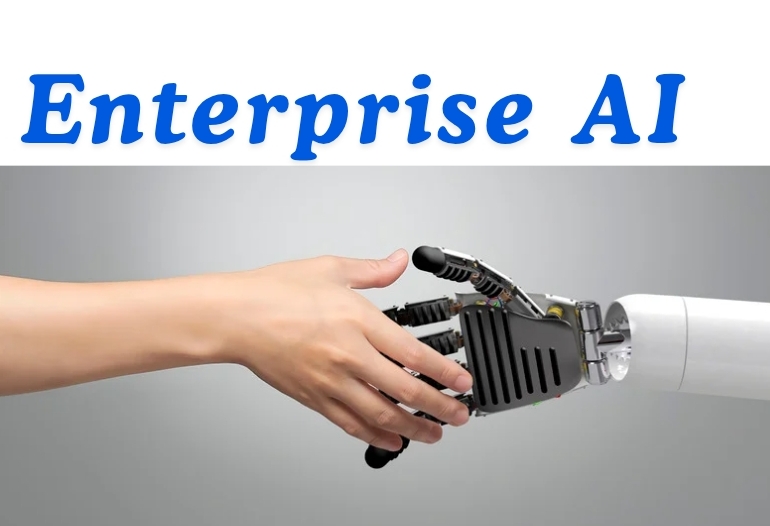
Enterprise AI is reshaping how companies grow and compete. Moreover, it helps teams save time, cut costs, and improve work quality. Leaders like Moveworks are proving that agentic AI brings measurable ROI. As a result, businesses around the world are investing heavily in this transformation.
What Is Enterprise AI?
Enterprise AI combines automation, data, and machine learning to make work faster and smarter. In fact, it drives better decisions by connecting tools and systems.
Key traits of Enterprise AI:
- Smart integration across company platforms
- Clear and trackable outcomes
- Secure and compliant frameworks
- Constant model improvement
For example, organizations use Enterprise-AI to handle support, HR, and compliance tasks with precision.
How Moveworks Leads in Enterprise AI
Moveworks is a strong example of Enterprise-AI done right. Its agentic AI systems solve IT, HR, and security issues automatically. In addition, it integrates with apps like Slack, ServiceNow, and Microsoft Teams.
Main advantages include:
- Fast setup and scalable design
- Support for multiple enterprise tools
- Focus on productivity and user experience
- Built-in compliance and privacy
Therefore, companies using Moveworks often see faster responses and lower support costs.
How Enterprise AI Delivers Real ROI
Enterprises use AI for real, measurable gains. As a result, they save money and improve business performance.
Common ROI factors include:
- Time savings: Reduced manual work across departments
- Higher productivity: Teams handle more with fewer delays
- Lower operational costs: Smooth workflows lower expenses
- Faster decisions: AI insights shorten approval cycles
- Better employee satisfaction: Quick help leads to happier teams
In short, Enterprise-AI pays off through automation and better decision support.
Common Enterprise AI Use Cases
Enterprise AI powers several everyday applications. Furthermore, these use cases show why adoption continues to grow.
1. IT and Helpdesk Automation
AI assistants answer support questions instantly. Consequently, employees avoid waiting for help.
2. HR Automation
Chatbots handle policy, benefits, and onboarding. Because of this, HR teams work more efficiently.
3. Customer Engagement
AI chatbots guide users and resolve issues quickly. In turn, satisfaction and retention increase.
4. Predictive Maintenance
AI predicts problems before they happen. Thus, it reduces downtime and repair costs.
5. Financial Forecasting
AI models review trends and support accurate reporting.
Why Agentic AI Matters in Enterprise AI
Traditional AI reacts to commands, but agentic AI acts with purpose. As a result, it understands context and adapts intelligently.
When applied to enterprise tasks, agentic AI:
- Interprets intent, not just requests
- Executes tasks across connected systems
- Learns from feedback for better results
Therefore, companies like Moveworks depend on agentic AI for continuous improvement.
Enterprise AI Integration Patterns That Work
A successful Enterprise AI strategy depends on smooth integration. For this reason, companies use several proven patterns.
Main integration styles:
- API-Led: Secure connections between AI and software systems
- Event-Driven: Real-time responses to actions or triggers
- Middleware: Tools that sync data across platforms
- Unified Data Lakes: Central data storage for cleaner AI training
In conclusion, strong integration gives Enterprise-AI systems the power to act intelligently and safely.
Ensuring Security and Compliance in Enterprise AI
Security is a key element in Enterprise-AI deployment. In addition, it builds user trust and meets legal obligations.
Important safety measures include:
- Data encryption and identity checks
- Compliance with GDPR and SOC 2 standards
- Transparent and explainable model design
- Controlled on-premise or private-cloud options
As a result, enterprises feel confident adopting secure, compliant AI.
Choosing the Right Enterprise AI Strategy
When adopting Enterprise AI, companies choose between platform and point-solution models.
| Strategy | Description | Ideal For |
|---|---|---|
| Platform Approach | Unified AI managing multiple functions | Large firms with complex needs |
| Point Solution | AI focused on one use case | Small or mid-size teams testing AI |
For example, Moveworks started as a point solution but evolved into a full platform. Thus, flexibility supports long-term value.
Reference Architectures in Enterprise AI
To work efficiently, Enterprise-AI needs a strong foundation. Furthermore, structured design improves performance and compliance.
A typical architecture includes:
- Data Layer: Manages secure access and updates
- AI Layer: Trains models and predicts outcomes
- Integration Layer: Connects tools and databases
- Interface Layer: Uses chat, apps, or web dashboards
- Monitoring Layer: Measures AI results and quality
Hence, this structure helps teams scale safely while maintaining control.
Wall-to-Wall Enterprise AI Deployment
Full deployment—also called wall-to-wall integration—means connecting AI across departments. Consequently, the organization gains unified intelligence.
Benefits include:
- Single data and security system
- Faster insights across departments
- Continuous workflow improvement
Additionally, this approach ensures everyone benefits from shared AI data.
How to Measure Real Enterprise AI ROI
ROI tracking keeps AI projects accountable. Therefore, companies should monitor both cost savings and performance impact.
Essential metrics include:
- Reduced manual hours
- Shorter task resolution times
- Lower error rates
- Improved customer review scores
Ultimately, consistent tracking proves whether Enterprise AI meets its goals.
Tips for Successful Enterprise AI Adoption
For long-term success:
- Start strategically. Therefore, start by choosing one clear use case.
- Plan integrations early. As a result, you can ensure smooth and secure data flow.
- Use human oversight. In this way, you maintain trust and accuracy in outputs.
- Explain outcomes clearly. Consequently, users easily understand AI-driven actions.
- Scale gradually. Finally, expand only after performance has been proven successful.
Therefore, steady growth ensures stronger adoption and sustained ROI.
Lessons from Moveworks and Other AI Leaders
Industry pioneers highlight valuable lessons:
- Tie AI initiatives directly to business value
- Build context-aware, adaptable systems
- Prioritize seamless integration with legacy tools
- Strengthen security to speed up adoption
- Track results to maintain stakeholder trust
Thus, these lessons form the foundation of effective Enterprise AI deployment.
The Future of Enterprise AI
Enterprise AI continues to evolve, as technology grows, new models will power intelligent copilots, voice tools, and automatic compliance checking.
Moreover, adaptive AI will understand human behavior more effectively. Therefore, future teams will work side-by-side with AI assistants.
Action Plan for Enterprise AI Success
Following are steps,
Step 1: Define business goals and ROI metrics.
Step 2: Pick one measurable use case.
Step 3: Secure data links and compliance coverage.
Step 4: Monitor real-time performance.
Step 5: Expand AI across all units.
Consequently, enterprises can scale safely while gaining continuous value.
Key Takeaways on Enterprise AI ROI
- Enterprise AI offers measurable business growth and ROI.
- Moveworks leads the way with agentic AI innovation.
- Secure integration ensures stable performance.
- Scalable design helps full transformation.
- The next era of AI will amplify intelligence across every enterprise.
In summary, Enterprise AI is not just a trend—it is a lasting transformation for global business success.