
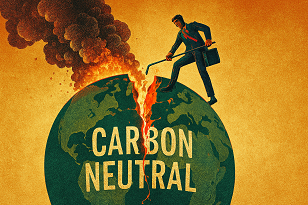
The world depends on corporations to lead climate change actions. Yet, most have failed to maintain true Carbon Neutrality. Many brands claimed success without proof. Real data and independent studies now show the gap between promises and impact. This article explores how it broke, the evidence, and how to fix it effectively.
What Carbon Neutrality Really Means
Carbon Neutrality means balancing emitted carbon with absorbed carbon. It happens when greenhouse gas emissions equal the amount removed from the atmosphere.
Companies often aim for this by:
- Cutting carbon emissions from operations.
- Using renewable energy.
- Investing in carbon offset projects.
A business is truly carbon neutral only if it reduces and offsets all emissions honestly and transparently.
The Rise of Corporate Climate Promises
Since the Paris Agreement, more corporations pledged to reach carbon neutrality. Tech giants, consumer brands, and manufacturers joined global initiatives. Terms like “net-zero,” “carbon offset,” and “green operations” became branding tools.
However, these promises often lacked accountability. Many firms focused more on appearance than results. They marketed “green” while continuing high emissions behind closed doors.
How Corporations Broke Carbon Neutrality
Evidence shows many corporate climate programs have failed. Reasons include overreliance on offsets, weak data, and misleading claims.
1. Overdependence on Carbon Offsets
Offsets are projects that absorb carbon, like tree planting or renewable energy funding. Many corporations rely on them instead of cutting real emissions. The problem: most offset projects either fail to deliver or double-count reductions.
2. Lack of Transparency
Many companies do not share real data about supply chain emissions. Without verification, claims remain marketing statements, not proof of sustainability.
3. Inaccurate Carbon Accounting
Measuring corporate carbon output is complex. Many firms only count direct emissions (Scope 1 and 2) while ignoring indirect emissions (Scope 3). But supply chain and product use stages usually produce most of the pollution.
4. Greenwashing Marketing
Some corporations use eco-labels and sustainability terms purely for promotion. They advertise “carbon neutral” without proof or verified audits. This confuses consumers and delays genuine climate progress.
Proof That Corporate Neutrality Claims Failed
Several studies and audits in recent years revealed critical flaws:
- A 2023 review showed that over 80% of top carbon offset projects failed long-term verification.
- Many carbon credits were overvalued and not linked to actual carbon absorption.
- Independent audits found several multinational companies underreported up to 60% of their total emissions.
- Climate watchdog organizations discovered false marketing where firms promoted “carbon neutrality” while emissions grew each year.
The evidence confirms that corporate carbon neutrality has been broken by loopholes, weak checks, and false accounting.
What Broke the System: Root Causes
1. Weak Global Standards
Different countries set inconsistent definitions for net-zero or carbon neutrality. Companies could choose loose certifications to appear compliant.
2. Voluntary Compliance Only
Most sustainability programs are voluntary. Without legal risk or mandatory audits, corporations can misreport progress safely.
3. Financial Incentives for Offsets
Offsets turned into business products. Intermediaries profit from selling carbon credits, whether real or fake. This shifted focus from emission reduction to cheap certification.
4. Lack of Independent Verification
Companies often audit themselves. Without third-party verification, claims remain unchecked.
5. Limited Public Awareness
Most consumers are unaware of the differences between net-zero, carbon neutral, and carbon offset. This allows misleading campaigns to go unchallenged.
The Real Fix: How to Rebuild Carbon Neutrality
Rebuilding true Carbon Neutrality requires structural, transparent, and measurable reforms.
1. Measure All Emissions Accurately
Businesses must track all emissions, including Scope 3 (supplier, product use, and waste). Tools like lifecycle analysis help identify complete emission footprints.
- Use verified standards like the Greenhouse Gas Protocol.
- Report data transparently on company websites.
2. Prioritize Reduction Over Offsetting
Offsets should be last, not first. Companies need to:
- Switch to renewable energy sources.
- Electrify transportation and logistics.
- Redesign production to reduce emissions at the source.
3. Use Verified, High-Quality Offsets Only
When used, offsets should meet strict validation like Gold Standard or Verified Carbon Standard (VCS). Avoid fast or unapproved credits.
4. Adopt Transparent Reporting
Make emissions data public yearly. Offer open dashboards showing progress toward neutrality. Transparency builds consumer trust and prevents greenwashing.
5. Independent Third-Party Audits
Mandatory audits by neutral climate agencies or certified verifiers confirm accountability. Governments should make these legally required, not optional.
6. Invest in Innovation and Circular Models
- Develop recyclable materials.
- Invest in carbon capture technologies.
- Create closed-loop supply chains to minimize waste.
7. Set Time-Bound Carbon Goals
Targets without deadlines fail. Corporations must set clear, measurable milestones like:
- 50% emission cut by 2030.
- Net-zero operations by 2040.
8. Educate Employees and Consumers
Create awareness campaigns explaining real carbon impact and sustainability. A climate-aware workforce and customer base reinforce ethics and accountability.
Case Examples: The Good and the Bad
Successful Implementations
- Patagonia: Reduces emissions through circular design, verified offset projects, and renewable sourcing.
- Microsoft: Invests in carbon removal technology and transparent carbon reports annually.
Failures and Lessons
- Multiple Airlines: Claimed carbon neutrality through offset purchases, yet fleet emissions kept rising.
- Fast-Fashion Retailers: Used deceptive eco-labels while maintaining unsustainable production rates.
These examples teach that sustainability must be rooted in measurable reduction, not just marketing slogans.
Why This Matters for the Global Climate
Corporations contribute over 70% of global emissions. If they fail at true carbon neutrality, no government plan can fill the gap.
Broken neutrality not only affects the environment but also investor confidence. Consumers now demand real proof. Authentic sustainability drives trust, profit, and long-term survival.
Governments and investors are also tightening reporting rules. The future will reward verified transparency, not false claims.
Key Indicators of a Genuine Carbon Neutral Plan
When assessing a company’s climate claims, look for:
- Full emission disclosure (Scope 1, 2, 3).
- Verified third-party emission reports.
- Clear short- and long-term carbon goals.
- Limited use of offsets and focus on reduction.
- Annual updates with measurable results.
If one or more of these are missing, the company may not be genuinely carbon neutral.
Why Current Systems Must Evolve
Global economic growth relies on energy. Shifting industries to renewable sources without disruption takes planning. Yet, delay hurts more.
The fix is not impossible: transparent digital systems can track emissions using blockchain and AI. These ensure traceability and real-time verification of carbon targets.
Governments can work with corporations to set universal reporting frameworks. This encourages honest participation and discourages fake claims.
Policy-Level Corrections Needed
- Mandatory Global Reporting: Standardize carbon reporting across all industries.
- Legal Penalties for False Claims: Punish misleading environmental advertising.
- Incentives for Innovation: Reward verified carbon removal and clean tech development.
- Public Access to Data: Create open databases listing each corporation’s verified emission stats.
These corrections will rebuild trust and close loopholes that broke the neutrality system.
The Future of Carbon Neutrality
The future of Carbon Neutrality lies in accountability. Companies will soon face tighter climate audits and stricter environmental governance.
Digital verification and data-based proof will become normal practice. Greenwashing will disappear under new transparency standards.
Corporations that embrace genuine reduction and verified neutrality will dominate sustainable markets. Those that resist will face penalties, loss of trust, and declining brand value.
Practical Steps for Every Business
- Conduct a full carbon audit.
- Eliminate unnecessary travel and transport.
- Use 100% renewable or mixed energy.
- Switch to digital operations to save power.
- Design products with recyclability in mind.
- Engage suppliers with sustainability commitments.
- Train team members to monitor and report emissions.
- Publish verified progress results quarterly.
Even small companies can lead impactful climate action by adopting consistent, honest reporting systems.
Action Plan for Rebuilding Carbon Neutrality
Step 1: Acknowledge broken systems. Admit the gap honestly.
Step 2: Measure actual emissions using reliable methods.
Step 3: Focus on emission reduction before purchasing offsets.
Step 4: Use verified offsets only when required.
Step 5: Conduct public third-party audits and publish results.
Step 6: Educate all stakeholders on transparent carbon strategy.
This plan works for corporations, governments, and individuals aiming for true climate responsibility.
Key Takeaways
- Many corporations broke carbon neutrality through false claims and overuse of offsets.
- Broken neutrality stems from weak standards, lack of audits, and poor transparency.
- Fixing it requires full emission visibility, verified reductions, and strict accountability.
- Real progress depends on honesty, traceable proof, and innovation-driven sustainability.
By applying these principles, corporations can regain public trust and rebuild genuine Carbon Neutrality. The time for shortcuts is over. The planet now demands real action—and verifiable results.