
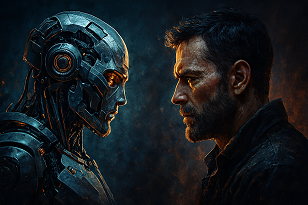
Artificial Intelligence (AI) has transitioned from a futuristic concept into our daily reality. In 2026, advanced machine learning models, generative AI tools, and automation systems have reached a level where they outperform humans in critical areas of work and life. While humans bring creativity, empathy, and moral decision-making to the table, machines are excelling in speed, accuracy, prediction, and large-scale processing.
In this article, we’ll compare AI vs humans across 15 specific tasks where AI now beats human intelligence. The goal is not to suggest that machines are replacing us completely, but rather to show where machine intelligence outshines human capability—and how this shift impacts jobs, industries, and society.
1. Data Analysis at Scale
One of the clearest victories for AI over humans is large-scale data analysis. While a skilled human analyst can detect patterns in spreadsheets or databases, AI systems process billions of data points in seconds.
- AI models identify patterns invisible to the naked eye.
- Predictive analytics helps businesses forecast sales, market trends, and customer behavior.
- Tools like ChatGPT Enterprise, Google Gemini, and Microsoft Copilot automate tasks once requiring full teams of analysts.
In finance and healthcare, AI-driven analytics reduce risk, speed up research, and optimize decision-making far beyond human capacity.
2. Medical Imaging and Diagnostics
Healthcare has been transformed by AI. Algorithms now rival or surpass radiologists in detecting tumors, heart problems, or early signs of disease.
- Image recognition AI scans X-rays, MRIs, and CTs with precision.
- AI identifies early signs of cancer up to years before human doctors.
- Machine intelligence reduces false negatives, saving lives.
Humans still play the role of compassionate caregivers, but in raw diagnostic accuracy, AI leads the way.
3. Language Translation
Traditional translations required years of training and fluency. Today, AI-powered tools like DeepL, Google Translate, and ChatGPT provide near-instant, context-aware translations across 100+ languages.
- AI offers speech-to-text translation in real time.
- It handles regional dialects and idiomatic expressions better than before.
- Businesses bypass language barriers instantly, something impossible for humans at scale.
While human translators excel in poetry, cultural nuance, and diplomacy, AI beats them in speed and accessibility.
4. Fraud Detection and Cybersecurity
In 2025, cyber fraud is more advanced than ever, but so is AI’s defense. Human monitoring alone cannot keep up with fraudulent transactions happening at thousands per second.
- AI-powered security systems analyze transaction patterns in real-time.
- Machine learning detects anomalies—suspicious login attempts, stolen cards, phishing campaigns—within milliseconds.
- Financial institutions and e-commerce platforms now depend heavily on AI-driven fraud detection.
Compared to humans, AI is tireless, precise, and faster at spotting subtle fraud patterns.
5. Gaming Strategy and Problem-Solving
Since DeepMind’s AlphaGo defeated world Go champions, AI continues to dominate highly strategic games where humans once reigned supreme.
- AI excels at chess, Go, and real-time strategy simulations.
- It doesn’t fatigue, second-guess, or make emotional errors.
- Modern AIs also serve as training partners for professionals.
Humans may find satisfaction in strategy, but in raw winning potential, machines own the battlefield.
6. Drug Discovery
Medication research traditionally takes decades. AI now shortens this timeline:
- AI predicts how molecules interact with the human body.
- It accelerates identifying promising compounds.
- Pharma companies use machine learning to test thousands of possibilities simultaneously.
For example, during past pandemics, AI systems generated vaccine candidates in days—a task nearly impossible for human scientists alone.
7. Weather Forecasting and Climate Predictions
Meteorology is complex, and human intuition has limits. AI-powered climate models now outperform humans in accuracy for both short-term and long-term forecasts.
- Systems process satellite data, ocean currents, and atmospheric pressure instantly.
- AI predicts natural disasters like hurricanes, floods, and wildfires more accurately.
- Governments use AI to prepare early warning systems and disaster recovery plans.
This is a sector where precision saves lives—AI holds the clear upper hand.
8. Content Generation and Automation
In 2025, AI-generated content dominates digital publishing, marketing, and entertainment. While human writers craft emotion and creativity, AI wins in volume and efficiency.
- AI tools generate blog posts, advertisements, video scripts, and social media campaigns.
- Platforms like Jasper, Writesonic, and ChatGPT Enterprise can draft thousands of words optimized for SEO.
- Content farms powered by AI drastically reduce costs for businesses.
Though human storytelling remains unique, the sheer scale of automated content makes AI the go-to for businesses focused on reach and speed.
9. Logistics and Supply Chain Management
AI-driven logistics platforms optimize everything from Amazon deliveries to global supply chains. Humans can’t match the complexity of real-time route adjustments, customs clearances, or fuel optimization.
- Route optimization algorithms cut costs and emissions.
- Machine intelligence predicts shortages and reroutes supply efficiently.
- AI-powered drones and robots handle warehouse management seamlessly.
The result: billions saved in global commerce—an area where AI fully dominates.
10. Financial Trading
Wall Street has always been a battle between humans and machines, and by 2025, AI is firmly ahead.
- Algorithmic trading executes in microseconds.
- AI systems consume global news, social sentiment, and market trends faster than human traders.
- Robo-advisors and trade bots manage investments automatically.
Humans still contribute strategy and ethical oversight, but when it comes to speed and accuracy, AI has won the stock market floor.
11. Image and Pattern Recognition
From facial recognition at airports to identifying defects in manufacturing, AI’s visual analysis capacity now far exceeds human abilities.
- Security agencies depend on AI cameras for real-time surveillance.
- Factories rely on image AI to detect product flaws invisible to the human eye.
- Healthcare applies it to diagnosing skin conditions.
Where humans grow tired or overlook details, machines keep seeing without distractions.
12. Driving and Autonomous Navigation
Human error remains the leading cause of accidents, but autonomous driving AI is slowly proving safer.
- Self-driving cars analyze millions of scenarios per second.
- AI drones navigate complex terrains for military and delivery purposes.
- Automated public transport reduces urban accidents by removing unpredictable human drivers.
While regulation slows full adoption, AI navigation already beats humans in efficiency and reaction time.
13. Personal Assistants and Scheduling
Juggling calendars, emails, and reminders was once a human assistant’s role. But in 2025, intelligent virtual assistants outperform humans in efficiency.
- Tools like Microsoft Copilot, Google Assistant, and Apple’s Siri manage schedules seamlessly.
- AI emails, sets meetings, and even negotiates appointments.
- Unlike humans, AI assistants never miss deadlines or suffer fatigue.
Though humans win in empathy and interpersonal management, in time optimization, AI reigns supreme.
14. Customer Support and Chatbots
Modern AI-driven chatbots now replace call centers. They work 24/7, speak multiple languages, and resolve issues instantly.
- AI identifies customer intent through natural language processing.
- It integrates with business systems to provide solutions.
- Companies reduce costs dramatically while maintaining customer satisfaction.
Humans still handle complex complaints and escalations, but routine queries are now dominated by machine intelligence.
15. Scientific Simulations and Space Exploration
Humans dream of the cosmos, but machines are doing much of the heavy lifting.
- AI analyzes space telescope data far better than human astronomers.
- Robotics and AI systems navigate Mars rovers and spacecraft autonomously.
- Quantum-AI simulations accelerate our understanding of physics.
In this domain, machines extend human potential, achieving what no single scientist could manage alone.
AI vs Humans: A Balanced View
While AI has clearly surpassed humans in these 15 areas, it’s important to emphasize that this does not equate to human redundancy. Machines excel in pattern recognition, speed, scale, and repetitive decision-making, but humans remain unmatched in creativity, empathy, ethical reasoning, adaptability, and consciousness.
The healthy future lies not in AI replacing humans entirely, but in partnership models, where machine intelligence amplifies human capacities. Fields like education, art, leadership, and deep philosophy remain inherently human-driven.
The Future: What Can Humans Do Better?
Even in 2025, some areas remain distinctly human:
- Emotional intelligence, empathy, and compassionate care.
- Ethical decision-making in gray areas where morality outweighs logic.
- Artistic originality that pushes beyond data-driven creativity.
- Intuition and abstract thinking where no dataset is reliable.
- Rather than viewing this as a loss, the challenge is to shift human talent into spaces AI cannot replicate.
Conclusion
The debate of AI vs humans is no longer a theory. In 2025, machines outperform humans in many tasks across medicine, finance, logistics, and creative automation. From data analysis to fraud detection and space exploration, AI capabilities are reshaping industries and redefining what it means to be intelligent.
The takeaway? Instead of fearing AI, humans must adapt, collaborate, and focus on the irreplaceable qualities of human intelligence. The true success of our era will come not from competition, but from synergy between intelligent machines and the human mind.