
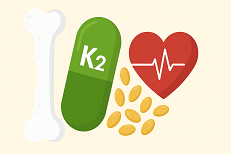
You work hard to stay healthy. You might track your steps, choose colorful vegetables, and perhaps even monitor your iron levels. But there’s a crucial nutrient that often flies under the radar, one that acts as a master conductor for where your minerals go. This is Vitamin K2.
Think of your body as a complex construction site. You supply the raw materials—calcium is the bricks, and iron is the sturdy rebar. But without a skilled foreman to direct the work, those bricks could end up in the wrong places, like your arteries instead of your bones. Vitamin K2 is that essential foreman.
This article is your practical blueprint. We will cut through the confusion and show you how this powerful vitamin builds stronger bones, protects your heart, and contributes to your overall vitality. Let’s unlock the simple steps to ensure you’re getting enough of this vital nutrient.
Beyond Clotting: Meet the K Vitamin Family
Most people know about Vitamin K1. It’s the clotting vitamin, found abundantly in leafy greens like spinach and kale. But Vitamin K2 is its more specialized cousin. It’s found in fermented foods and certain animal products, and its job is entirely different. K2’s primary role is to activate proteins that manage calcium. This process is called carboxylation, and it’s what makes the proteins “sticky” for calcium, ensuring it gets to the right destinations.
Without sufficient K2, these proteins remain inactive. Consequently, calcium can drift through your bloodstream, potentially causing problems instead of providing strength. Understanding this distinction is the first step to harnessing its power.
Your Skeletal Framework: How K2 Reinforces Bone Integrity
Your bones are living tissue, constantly being broken down and rebuilt. For this process to work in your favor, calcium must be effectively woven into the bone matrix. This is where Vitamin K2 takes center stage.
It activates two key proteins: osteocalcin and matrix GLA protein. Osteocalcin is like the concrete that binds calcium to your bones. When K2 activates it, osteocalcin can pull calcium from your blood and securely embed it into your bone tissue. This directly enhances bone mineral density. In fact, robust studies have shown that high intakes of Vitamin K2 are linked to a significantly lower risk of vertebral fractures and hip fractures.
Therefore, if you’re focusing on calcium for bone health but neglecting K2, you’re missing a critical piece of the puzzle. It’s the synergy that creates truly resilient bones.
Your Cardiovascular Shield: Preventing Calcification Where It Doesn’t Belong
Now, let’s talk about your arteries. Imagine them as flexible, smooth highways for your blood. You don’t want speed bumps or rubble blocking the flow. Unfortunately, when calcium deposits itself in the arterial walls, it creates a condition called arterial calcification. This is a major risk factor for heart disease.
Here’s the good news: Vitamin K2 activates matrix GLA protein (MGP), which is one of your body’s most potent inhibitors of vascular calcification. MGP acts like a shield, grabbing onto circulating calcium and preventing it from crystallizing in your soft tissues. As a result, keeping your K2 levels optimal helps maintain the elasticity and health of your arteries, supporting long-term cardiovascular function.
Are You Running Low? Spotting the Subtle Signs of K2 Insufficiency
Unlike a major nutrient deficiency, a lack of Vitamin K2 doesn’t always come with glaring symptoms. The signs are often subtle and long-term. You might want to assess your K2 status if:
- You have a family history of osteoporosis or cardiovascular disease.
- experience frequent dental cavities or gum issues (teeth are bones, too!).
- You’ve been told you have early signs of arterial stiffness.
- Your diet lacks fermented foods or high-quality animal products.
Furthermore, certain lifestyle factors can impact your levels. For instance, the use of specific medications or pre-existing gut health issues can affect your absorption of all fat-soluble vitamins, including K2.
Fueling Your Foreman: Top Food Sources to Boost Your Intake
You don’t need a pharmacy to get more K2; you just need to know what to look for in the grocery store or market. This vitamin is most abundant in fermented foods and products from grass-fed animals. Here is a simple list of powerhouse sources:
- Natto: A traditional Japanese food made from fermented soybeans; it is the richest source by far.
- Aged Gouda and Hard Cheeses: Especially those from grass-fed cows.
- Egg Yolks: Choose pasture-raised eggs for a higher content.
- Butter from Grass-Fed Cows: A delicious and easy addition to your diet.
- Chicken Liver: Particularly from pasture-raised birds.
- Fermented Vegetables: Sauerkraut and kimchi contain modest amounts.
Transitioning to the next point, it’s worth noting that the modern diet is often low in these foods, which is why supplementation has become a popular topic.
Navigating the Supplement Aisle: Your Checklist for Choosing a K2 Supplement
While food should always come first, a high-quality supplement can be an effective strategy. If you’re considering this route, here’s what to look for:
- Check the Form: Look for “MK-7” (menaquinone-7) on the label. This form has a longer half-life in your body, providing more stable and sustained support.
- Pair with D3: Vitamin D3 helps your body absorb calcium, and K2 directs it. Therefore, many effective supplements combine these two for a synergistic effect.
- Take with Fat: Since K2 is fat-soluble, take your supplement with a meal that contains healthy fats, like avocado or olive oil, to enhance absorption.
- Mind Your Meds: If you are on blood-thinning medications like warfarin, you must consult your doctor before starting any Vitamin K supplement.
The Mineral Synergy: How K2 Works Alongside Other Key Nutrients
Vitamin K2 doesn’t work in a vacuum. It’s part of a team. For optimal bone and heart health, you need a balanced intake of several nutrients. Think of it as an orchestra where every player is essential.
- Vitamin D3: As mentioned, D3 pulls calcium from your gut into your bloodstream. K2 then takes over, directing it to the bones and teeth.
- Magnesium: This mineral is a co-factor for hundreds of enzymes, including those that help activate Vitamin D. Without enough magnesium, your D and K2 can’t do their jobs effectively.
- Calcium: The fundamental building block itself. However, the source matters. Getting calcium from a whole-food diet is generally safer and more effective than high-dose supplementation without K2.
- Iron: While not directly involved in calcium metabolism, maintaining healthy iron levels is crucial for overall energy and vitality. A deficiency in iron can leave you feeling fatigued, undermining your efforts to live an active, bone-strengthening lifestyle. Ensuring adequate iron status supports the oxygen-carrying capacity of your blood, which is fundamental for every cell, including those building bone and maintaining heart tissue.
Tailoring Your Approach: K2 Considerations for Different Life Stages
Your needs for Vitamin K2 can change throughout your life. Here’s a quick guide:
- For Menopausal Women: The decline in estrogen accelerates bone loss. Ensuring optimal K2 intake becomes a critical strategy for preserving bone density during this transition.
- Active Adults and Athletes: Strong bones are non-negotiable for performance and injury prevention. K2 helps ensure the calcium from your diet is used to repair and strengthen your skeletal system under stress.
- For Older Adults: Protecting against both fractures and arterial stiffness is a top priority for healthy aging. A consistent intake of K2 is a proactive measure for longevity.
- Children: While typically obtained through a balanced diet, K2 is essential for building a strong skeletal foundation that lasts a lifetime.
Your Action Plan: Simple Steps to Harness the Power of K2 Today
Feeling ready to put this knowledge into practice? You don’t need to overhaul your life overnight. Start with these simple, actionable steps:
- Add One Fermented Food: Introduce a spoonful of sauerkraut to your salad or try natto if you’re feeling adventurous.
- Upgrade Your Dairy: Switch to cheese from grass-fed cows, like Gouda or Brie, for your next snack.
- Choose Better Eggs: Opt for pasture-raised eggs. The deeper orange yolk is a sign of higher nutrient density.
- Consider a Quality Supplement: If your diet falls short, research a reputable MK-7 supplement and take it with your largest meal of the day.
- Get a Sunshine Vitamin Check: Since D3 and K2 are partners, ask your doctor to check your Vitamin D levels to ensure they are in an optimal range.
Final Thoughts: Building Lifelong Health from the Ground Up
Vitamin K2 is a testament to the beautiful complexity of human health. It’s not just about the individual nutrients we consume, but about how they work in concert. By directing calcium to your bones and teeth and away from your arteries, K2 plays a unique and vital role in building a resilient body.
Remember, this isn’t about adding another worry to your plate. It’s about making a few informed choices—a different food selection, a thoughtful supplement—that can yield profound benefits for your skeletal strength and cardiovascular health for years to come. Start small, be consistent, and build your foundation for a stronger, healthier you.