
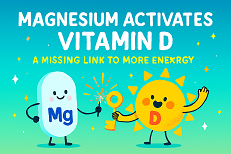
Feeling drained even after a full night’s sleep? That low energy might not just be about sleep or diet — it could trace back to two nutrients quietly controlling your vitality: magnesium and vitamin D. Together, they unlock energy production at the cellular level — but one can’t work without the other.
Below is your practical guide to understanding how this duo fuels energy, why magnesium is the gatekeeper for vitamin D activation, and how small nutrition choices can recharge both your body and mind.
When Your Energy Circuit Trips: What’s Going On Inside
Think of your body as an electrical network. Cells use nutrients to generate current — your life force. When magnesium is missing, vitamin D, an essential switch for many biochemical reactions, stays inactive. As a result, you may feel fatigue, mood dips, or slower muscle recovery.
Magnesium helps convert vitamin D into its active form — calcitriol. Without that conversion, your body can’t fully absorb calcium, regulate hormones, or use iron efficiently to produce red blood cells. So, magnesium isn’t just supporting vitamin D; it’s quietly powering every spark of daily energy.
Why Vitamin D Alone Can’t Give You Energy
Vitamin D supplements are everywhere, but research shows that they often fail to raise levels unless magnesium is available. The reason: active vitamin D conversion requires magnesium-dependent enzymes.
Without this mineral, the vitamin remains “locked,” unable to influence muscle function, immune balance, or iron utilization — all key for stamina and strength. That’s why people can take vitamin D for months yet still feel sluggish.
Hidden Clues That You’re Running Low on Magnesium
Since magnesium works silently inside your cells, deficiencies often look like everyday fatigue. Think about these subtle signs:
- You wake up tired despite eight hours of sleep
- Muscles cramp easily or twitch
- Heartbeat sometimes feels uneven
- You feel anxious or mentally foggy
- Iron supplements seem less effective
Low magnesium silently limits how your body activates vitamin D, leading to cascading nutrient inefficiencies that mimic chronic tiredness.
The Iron Bridge: Where Magnesium, Vitamin D, and Energy Meet
To make energy, your body needs efficient oxygen delivery — and iron sits at the center of that process. But here’s the twist: magnesium and vitamin D influence how iron behaves inside your system.
Vitamin D supports red blood cell formation, while magnesium ensures proper hemoglobin synthesis and enzyme balance. When magnesium is missing, both vitamin D and iron lose efficiency. This can lead to low oxygen transport and fatigue, even with a balanced diet.
It’s a nutrient triangle: iron fuels oxygen, vitamin D regulates blood health, and magnesium keeps both active.
Rebuilding the Connection: How to Reactivate Your Energy Pathways
If your body is a circuit board, magnesium flips the master switch. Supporting this connection doesn’t require extreme diets — just consistent nutrient synergy. Start with these strategies:
- Pair foods naturally rich in magnesium and vitamin D.
- Eat balanced meals that also enhance iron uptake.
- Avoid over-supplementing a single vitamin — focus on absorption.
- Choose foods grown in mineral-rich soil when possible.
A holistic approach reignites cellular energy by aligning three nutrients rather than isolating one.
Food Combinations That Keep Energy Flowing Naturally
Let’s go practical. Here are food pairings that activate vitamin D naturally and maintain better iron levels:
- Spinach + Grilled Salmon: Magnesium from spinach helps activate vitamin D in salmon.
- Beans + Eggs: The combination improves both mg and iron absorption.
- Pumpkin Seeds + Yogurt: Adds mg and supports gut health for nutrient uptake.
- Tofu + Mushrooms: Combines plant-based mg and natural vitamin D sources.
- Dark Chocolate + Nuts: Delicious and supportive for mood, heart, and energy metabolism.
Simple meal planning can restore nutrient teamwork without relying on expensive supplements.
Don’t Skip Sunshine, But Add Seeds to the Plate
Sun exposure should ideally maintain vitamin D levels. Yet air pollution, indoor lifestyles, and skin coverage reduce its benefits. Combine short sun sessions with daily magnesium sources like pumpkin seeds, rajma (kidney beans), and bajra (pearl millet).
When you add these, iron absorption also improves through enhanced blood production, preventing subtle anemia-related fatigue commonly seen in Indian adults.
Supplement Choices: When Food Alone Isn’t Enough
Sometimes diet and sunlight aren’t enough — for example, during monsoon months or in older adults. A well-balanced supplement may help but look for formulas containing both mg and vitamin D in bioavailable forms.
- Choose magnesium glycinate or citrate for better absorption.
- Pair it with vitamin D3 (cholecalciferol) for natural synergy.
- Avoid overdoing iron if your levels are normal — excess can backfire.
Always consult a healthcare professional before combining minerals, especially if you’re on medication or have kidney issues.
Rested Body, Focused Mind: How Magnesium Improves Sleep and Mood
Mg calms the nervous system by regulating the neurotransmitter GABA, which promotes relaxation. That calm mind makes vitamin D’s hormonal effects more stable — improving energy and mood the next day. Interestingly, this also enhances iron metabolism by lowering stress-induced inflammation.
The result: deeper sleep, improved mental clarity, and steady endurance throughout the day.
Small Actions with Big Energy Payoff
Building lasting energy doesn’t come from coffee or quick fixes; it grows from mineral intelligence. Here’s your take-home framework:
- Eat a rainbow of mg-rich foods daily.
- Get 10–15 minutes of morning sunlight.
- Keep balanced iron intake through whole foods.
- Hydrate well to help minerals move across cells.
- Rest regularly; stress quickly drains mg stores.
Over time, you’ll not only activate vitamin D better but also sustain natural energy production without dependence on stimulants.
Key Takeaway: The Energy Equation Starts With Magnesium
When fatigue feels endless, remember that magnesium could be the spark your system is missing. It turns vitamin D from idle to active, optimizes iron’s oxygen delivery, and restores vitality from the ground up.
Energy isn’t made from a single nutrient — it’s a symphony where magnesium conducts the orchestra. Balance your minerals, listen to your body, and let your natural brightness return.
Author’s Note:
This article is educational only. Always check with a qualified healthcare provider before making major supplement changes, especially if you have chronic conditions or take prescribed medications.