
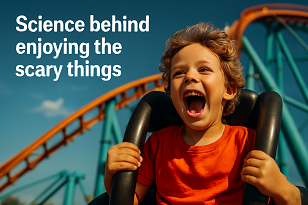
The moment you step onto a roller coaster, your heart races, your palms sweat, and excitement fills your chest. Yet despite the fear, you still smile and scream for more. Why do people love feeling scared on a roller coaster? The answer lies in a mix of neuroscience, physics, and psychology. These thrilling rides perfectly combine terror and fun, giving the brain a powerful rush that feels incredible.
The Science of Fear and Fun – Roller Coaster
Fear usually protects us from danger. But when you’re strapped safely into a roller coaster, your brain recognizes the fear as safe. That makes the screaming enjoyable instead of terrifying.
The body goes into fight-or-flight mode, releasing adrenaline, dopamine, and endorphins. This chemical cocktail explains why people feel terrified yet exhilarated during a ride.
- Adrenaline boosts heart rate and sharpens focus.
- Dopamine provides pleasure and reinforces excitement.
- Endorphins relieve stress and induce happiness.
Because of these reactions, your brain ends up associating fear with fun. That’s why you often want to ride again immediately after stepping off.
How The Brain Reacts to Roller Coaster
When you ride a roller coaster, your brain activates specific areas related to emotion, balance, and motion:
- The amygdala triggers fear. It helps your body prepare for what feels like danger.
- The prefrontal cortex tells you that the ride is not truly dangerous.
- The vestibular system senses the rapid changes in direction and speed, intensifying the physical sensation of movement.
Together, these regions generate a thrilling mix of alarm and assurance, creating a loop of safe fear that feels addictive.
The Physics Behind the Thrill
Every roller coaster is a masterpiece of physics. It uses potential and kinetic energy to turn calm moments into adrenaline-charged drops.
At the top of the first hill, your body builds potential energy. As the coaster plunges downward, gravity converts that energy into kinetic energy, creating incredible acceleration.
The sense of weightlessness and rapid turns can be explained by G-force. When you go over a hill or into a loop, your body experiences forces greater—or sometimes lower—than normal gravity. These forces shift the pressure on your internal organs, giving the amazing floating feeling that riders crave.
Why Feeling Scared Feels So Good
Surprisingly, fear and pleasure often share similar brain pathways. Both release dopamine in the mesolimbic system, which is the brain’s reward center. This makes fear desirable when the risk feels controlled.
A roller coaster provides perfect conditions for this paradox. You experience danger cues—speed, height, sudden drops—but you know the environment is safe. Because the brain can’t quickly distinguish between safe and real fear, it produces the same thrilling responses without actual harm.
That’s why you laugh after screaming. It’s your body’s way of celebrating survival.
Roller Coaster and The Brain’s Reward Circuit
After a ride, many people feel euphoric or even addicted to the thrill. That’s because of the dopamine feedback loop. When you sense danger but experience safety, dopamine solidifies that memory as rewarding. The next time you see a roller coaster, those chemical memories encourage you to chase that high again.
Neuroscientists call this a positive feedback loop of thrill-seeking. It’s the same system that motivates athletes, explorers, and adventurers to take exciting risks.
How Motion Affects The Body
When you accelerate, decelerate, or twist suddenly on a roller coaster, your body experiences rapid shifts in momentum. According to Newton’s laws of motion:
- Every motion or direction change produces opposite forces.
- The car pushes your body, while gravity simultaneously pulls it.
- Air resistance interacts with velocity, affecting the intensity of each drop.
These constant changes explain why your stomach feels like it’s rising or dropping. The feeling of floating or free-fall comes when your inner ear senses reduced gravitational force, creating the illusion of flying.
The Physics of Loops and Turns
Corkscrews, loops, and 90-degree drops create fascinating physics challenges. Engineers apply centrifugal and centripetal forces precisely to keep the car on track. When you go upside down, centripetal force keeps your body pressed into the seat even when gravity seems to pull you away.
- Centripetal force: Pulls objects toward the center of rotation, keeping you in motion along curved paths.
- Centrifugal illusion: Makes you feel like you’re being pushed outward, even though the real force pulls inward.
This balance makes loops both intense and safe, blending fear with control.
The Role of Anticipation
Before the ride even begins, anticipation builds excitement. Waiting in line, hearing the screams, and seeing the towering rides all trigger your imagination. Anticipation increases dopamine levels even before the physical drop, which amplifies emotional intensity once the ride starts.
That’s why the slow climb up the first hill feels so suspenseful. The brain prepares for what’s coming, deepening the emotional contrast between calm and chaos.
Emotional Release and Stress Relief
Interestingly, facing fear safely can actually reduce everyday stress. During a roller coaster experience, your body expels built-up tension through adrenaline release. Afterward, your cortisol (stress hormone) levels drop, leaving a lasting sense of relaxation.
This is why many people feel lighter or happier after screaming their lungs out. The ride becomes a form of emotional therapy—a high-speed reset button.
Why We Want More
Every thrilling experience reinforces the pleasure-fear loop. The stronger the fear, the greater the relief once it’s over. That relief releases even more endorphins, encouraging you to do it again. It’s a cycle of emotional highs that feeds human curiosity and our desire for excitement.
Humans evolved to learn through challenge and risk-taking. Roller coasters satisfy that instinct safely. They let us explore danger, test limits, and experience control over chaos—all within a few minutes.
The Social Side of Roller Coasters
Riding with friends or family increases the thrill. Shared screams and laughter activate mirror neurons, which synchronize emotional experiences among people. This collective joy strengthens social bonds and heightens overall satisfaction.
That’s why group rides often feel more exciting than solo ones. The social feedback multiplies the emotional energy of the ride.
Engineering Safety Makes Fear Enjoyable
Modern roller coasters use advanced design, precise engineering, and complex testing to ensure complete safety. Every curve, drop, and turn follows strict physical laws and safety standards. Because the brain knows subconsciously that the structure is reliable, you can surrender fully to the thrill.
- Steel frames absorb extreme stress.
- Harnesses distribute body pressure evenly.
- Computer simulations ensure smooth force transitions.
The better the safety design, the more fear your brain is willing to enjoy.
The Role of Sound and Speed
Sound is a big part of why a roller coaster feels scarier. The clacking chains, whirring wheels, and screams create an atmosphere of intensity. When combined with rapid motion and wind hitting your face, your senses multiply the illusion of danger.
The brain perceives high volume and speed as warning signs, heightening emotional alertness. Yet you also recognize them as temporary, allowing both fear and fun to coexist.
The Physics of Ups and Downs
The laws of energy conservation govern every movement of a roller coaster. When energy transfers between potential and kinetic states, riders experience changes in motion and gravity that produce excitement.
When the coaster descends, energy converts rapidly, producing speed. The mind interprets this acceleration as danger, and that triggers the adrenaline spike.
Why Children and Adults Experience It Differently
Children often feel pure wonder, while adults mix excitement with caution. Age influences how the brain evaluates risk. Younger riders rely more on curiosity; adults engage reasoning regions that weigh safety. Still, both age groups get the same chemical rewards after the ride—dopamine and endorphins flood the system, building joyful memories.
How Physics Creates Illusions
Roller coaster designers use physics principles to create illusions of danger. Sharp tilts, blind drops, and spirals exaggerate perception by manipulating speed and visual cues. You think you’re flying faster or falling farther than you are because visual data reaches the brain slightly slower than motion sensations.
That slight delay makes each drop more shocking and delightful. It proves that what you see and what you feel can differ dramatically due to the brain’s processing speed.
Balancing Fear and Control
What makes the experience irresistible is balance. Riders feel scared, but they also trust the structure and safety measures. That mix of vulnerability and security creates what psychologists call controlled fear—a key to thrill enjoyment.
Controlled fear means the brain experiences real stress hormones but quickly resolves them with relief. The emotional cycle becomes rewarding instead of traumatic.
Why Roller Coaster Design Keeps Evolving
Engineers constantly push design boundaries to increase excitement while maintaining comfort. Innovations include magnetic propulsion, smoother inversions, and more immersive sound systems. These features trick the body into deeper perception of motion while keeping physical safety intact.
The blend of neuroscience, technology, and physics continues to redefine the thrill experience. Future roller coaster designs might merge virtual and physical sensations for even more realistic emotional highs.
Tips to Maximize Your Roller Coaster Experience
- Breathe deeply: It calms nerves before the first drop.
- Keep your eyes open: Seeing the track helps the brain predict motion.
- Ride with friends: Shared excitement strengthens enjoyment.
- Embrace fear: Remind yourself that it’s safe and temporary.
- Try different rides: Each coaster geometry affects physics differently.
The Perfect Blend of Science and Emotion
Roller coasters represent more than amusement—they’re proof of how human emotion, physics, and engineering combine perfectly. They let people explore fear in safe conditions while stimulating the mind and body. The thrill isn’t only about speed; it’s about experiencing controlled chaos within safety boundaries.
Understanding the physics and neuroscience of roller coasters helps explain why millions of people seek them out repeatedly. It’s not madness—it’s chemistry and physics in splendid harmony.
Key Takeaways and Action Plan
Key Takeaways:
- Roller coasters activate both fear and pleasure centers in the brain.
- Adrenaline, dopamine, and endorphins produce exhilaration and relief.
- Physics laws like energy conversion and G-force explain the thrilling sensations.
- Safe fear creates powerful emotional bonding and stress relief.
- Social and sensory factors heighten the shared excitement.
Action Plan:
- Learn the science before your next ride—it enhances appreciation.
- Face fear consciously to build confidence and reduce anxiety.
- Observe how physics, speed, and gravity interact—watch curves and loops closely.
- Reflect on the chemical high afterward and recognize your brain’s joyous reward loop.
- Use roller coasters as reminders that fear, when understood, can become your greatest thrill.
Riding a roller coaster is more than amusement—it’s a celebration of human sensation, scientific wonder, and emotional bravery wrapped into one unforgettable ride.